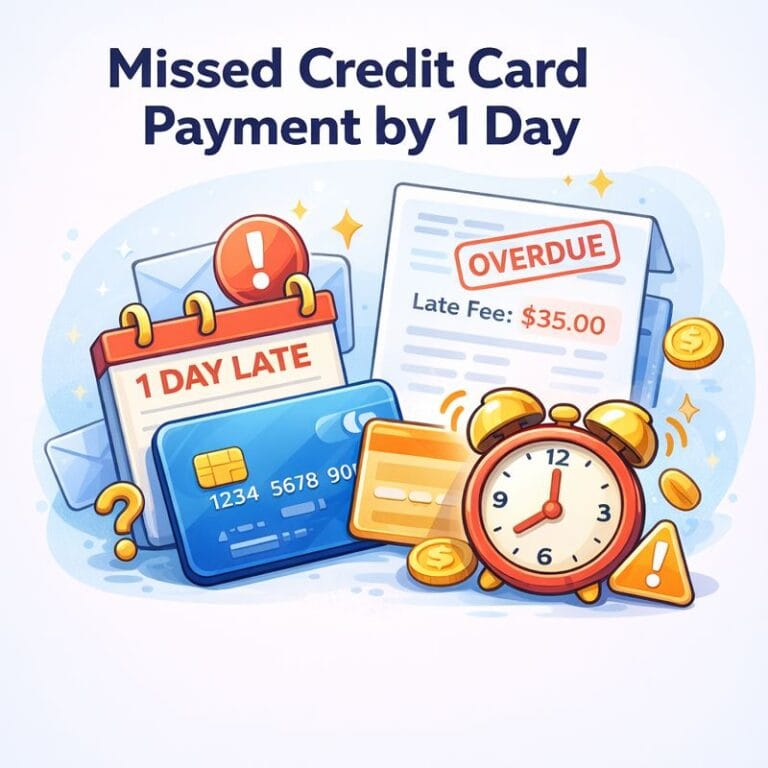
Missing a credit card payment happens to plenty of people—maybe you forgot, or money got tight that month. It can feel stressful because it affects your finances right away and could make borrowing harder down the road, like for a car loan or mortgage.
Immediate Effects
- You’ll likely get charged a late fee, often around $30 or so, depending on your card issuer.
- Interest starts piling up faster on your unpaid balance.
- If you had a promotional low or zero interest rate, you might lose it.
- Some issuers could trigger a higher penalty interest rate if the payment is quite late.
Long-Term Consequences
If the missed payment goes 30 days or more past due, it usually gets reported to the credit bureaus. That can lower your credit score, sometimes by a lot if your history was strong before. The mark stays on your credit report for seven years, though its impact fades over time as you keep up good habits. A lower score might mean higher interest rates on future loans or trouble getting approved for new credit.
Can You Fix It?
Pay at least the minimum amount as soon as you can to stop things from getting worse. Call your card issuer right away—they might waive the late fee, especially if it’s your first time or you have a solid payment history. Set up autopay for future bills, or change your due date to one that fits your paycheck better. You could also add reminders on your phone.
Final Thoughts
Missing one payment isn’t the end of the world, and quick action helps limit the damage. This is just general information, not personalized financial advice—everyone’s situation is different.